Chinese Foot Massage (足疗): Chinese Foot Reflexology Chart, Chinese Meridian Chart & Chinese Acupressure Points
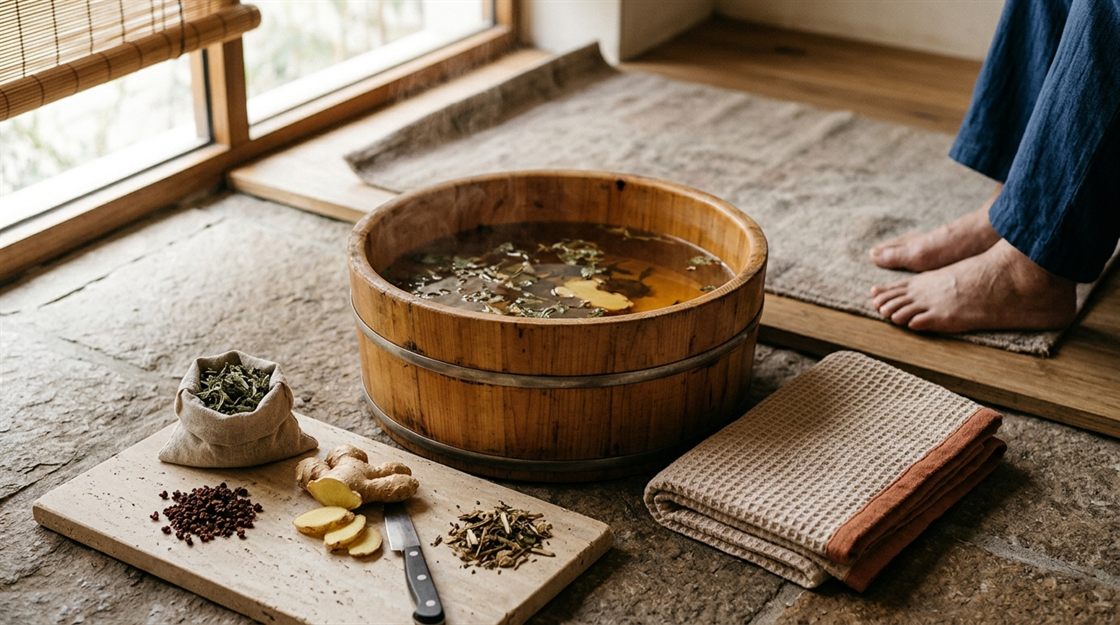
A traditional 60-minute Chinese foot massage (足疗 Zúliáo, RMB 138–238 / $19–$33 USD) blends a steaming herbal soak with precision thumb work across both the plantar reflex zones and the 12 TCM meridians. Explore our interactive Chinese foot reflexology chart, Chinese meridian chart, and Chinese massage foot chart below, or download the free acupressure points guide PDF.
- 60-Min Foot Spa
- ¥138–¥238 ($19–$33)
- Mapped Acupoints
- 7 Key Zones + Audio
- Printable Guide
- Free A4/Letter PDF
Interactive 60-Minute Chinese Foot Reflexology & Meridian Chart
Click any numbered point (#1–#7) on the anatomical sole or lower-leg atlas below to inspect its TCM role and play the exact Mandarin instruction aloud.
1. Herbal Wood-Tub Soak
42°C mugwort & ginger soak with seated neck and shoulder Tuina.
2. Plantar Sole (#1–#4)
Index-knuckle gliding across Yongquan (KI-1), solar plexus, arch & heel.
3. Leg Meridians (#5–#7)
Thumb acupressure & percussion along ST-36, SP-6 & LR-3.
Yongquan (Bubbling Spring) (涌泉穴)
Yǒngquán Xué · Kidney Meridian (足少阴肾经)
Anatomical Location
Anterior 1/3 depression of plantar sole between 2nd & 3rd metatarsals
Role in a 60-Min Chinese Foot Spa
In traditional Chinese foot bath culture, Yongquan is the signature grounding point at the front depression of the sole. Therapists press it with rhythmic thumb knuckles right after the mugwort herbal soak to unwind walking fatigue and jet lag.
Expected Sensation
Deep, warm dull ache (酸胀感 Suānzhàng). Very soothing when pressed steadily.
师傅,请帮我重点按一下脚底涌泉穴,力道适中,谢谢。
Shīfu, qǐng bāng wǒ zhòngdiǎn àn yīxià jiǎodǐ Yǒngquán xué, lìdào shìzhōng, xièxie.
“Master, please focus on the Yongquan point on the sole with moderate pressure.”
How a Chinese Massage Foot Chart Combines Sole Reflexology & Twelve Meridians
When you ask for a Chinese massage foot chart in Beijing or Shanghai, you will notice therapists work all the way up to your knee. That is because authentic Chinese Zuliao unites two distinct anatomical maps into one seamless 60-minute sequence.
The Chinese Foot Reflexology Chart (足底反射区图)
Maps over 60 nerve-rich micro-zones across the plantar surface, medial arch, and heel. During minutes 15–45 of your session, the therapist uses a flexed index knuckle (单食指扣拳法) to glide firmly across:
- • Big Toe Pads: Head, cervical neck, and pituitary sleep regulation.
- • Upper Plantar Ball: Trapezius, lungs, and upper back tension.
- • Central Arch: Stomach, spleen, adrenal glands, and digestive qi.
- • Deep Heel Pad: Lumbar spine, pelvic floor, and sciatic nerve root.
The Chinese Meridian Chart & Acupressure Points (经络穴位图)
Six of the body’s twelve primary meridians (Three Yin and Three Yang channels of the foot) begin or terminate at the toes and travel past the ankle up to the knee. During the final 15 minutes, therapists press four powerhouse Chinese acupressure points:
- • KD-1 Yongquan (涌泉穴): Sole depression at the 1/3 mark — grounds jet lag & insomnia.
- • LR-3 Taichong (太冲穴): Top of foot webbing between 1st & 2nd toes — clears stress & headaches.
- • SP-6 Sanyinjiao (三阴交): 3寸 above inner ankle — intersection of Liver, Spleen & Kidney yin.
- • ST-36 Zusanli (足三里): 3寸 below outer knee — master longevity point for leg stamina.
3 Questions Your Foot Reflexology Therapist Will Ask You
Tap any flashcard below to broadcast natural Mandarin voice aloud for visually impaired Tuina masters, preview the 3 questions therapists ask most, or flash the reception Dianping price-match pass.
这个力道可以吗?
Zhège lìdào kěyǐ ma?
"Is this pressure okay for you?"
Asked 2–3 minutes into the session to calibrate thumb or elbow pressure.
Tap your instant reply:
疼不疼?酸不酸?
Téng bù téng? Suān bù suān?
"Does it hurt (sharp), or does it feel sore-achy (good Qi sensation)?"
Distinguishes sharp pain (Téng — bad) from deep therapeutic soreness (Suānzhàng — good).
Tap your instant reply:
今天哪里最不舒服?重点按哪里?
Jīntiān nǎlǐ zuì bù shūfu? Zhòngdiǎn àn nǎlǐ?
"Where do you feel most uncomfortable today? Where should I focus?"
Asked right after you lie down or sit in the foot massage recliner.
Tap your instant reply:
Frequently Asked Questions About Chinese Foot Massage & Reflexology Charts
Field-tested answers on pricing, tipping etiquette, hygiene standards, and Mandarin communication.
Does Chinese foot reflexology work?
Chinese foot reflexology combines plantar nerve stimulation with Traditional Chinese Medicine (TCM) meridian acupressure along the Kidney, Liver, Spleen, and Stomach channels. Clinical studies and centuries of practice show that a 60-minute warm herbal soak and deep thumb acupressure significantly improve lower-limb venous return, reduce plantar fasciitis soreness, and activate parasympathetic relaxation for deeper sleep.
Can you provide a Chinese reflexology chart for the feet?
Yes — use our interactive Chinese foot reflexology chart above to click any plantar zone or lower-leg meridian acupoint, or click the "Download Bilingual Printable Chart PDF" button to save a print-ready A4/Letter PDF sheet complete with Chinese characters (汉字), anatomical diagrams, and Mandarin phrases for your session.
What does it mean when a foot reflexology point hurts?
In Chinese foot massage, feeling a dull, warm, sour-achy sensation ("Suānzhàng" 酸胀) on the arch or big toe indicates myofascial tension from walking or corresponding meridian fatigue (such as digestive or sleep stress). However, sharp or electric pain means the therapist is pressing too hard on a superficial nerve or bone — tap our Mandarin voice button to say "Qīng yīdiǎn" (请轻一点, lighter please).
What happens during a traditional 60-minute Chinese foot massage (足疗)?
A classic 60-minute session starts with a 15-minute steaming mugwort and ginger herbal foot soak while the therapist massages your neck, shoulders, and arms. Next comes 30 minutes of knuckle and thumb reflexology across the soles, heels, and ankles, finishing with 15 minutes of rhythmic lower-leg meridian acupressure (hitting ST-36 Zusanli and SP-6 Sanyinjiao) and warm towel percussion.
How is a Chinese foot reflexology chart different from a Chinese meridian chart?
A Chinese foot reflexology chart maps surface zones on the sole of the foot (such as the central arch for the stomach/digestive system and the heel for the lower back/sciatic nerve). A Chinese meridian chart maps the 12 longitudinal energy channels and specific acupoints (such as KD-1 Yongquan, LR-3 Taichong, SP-6 Sanyinjiao, and ST-36 Zusanli) that run from the toes up the lower leg to internal organs.
Complete 8-Part China Wellness Index
Every guide includes Mandarin voice audio, Dianping walk-in screens, and DiDi taxi cards.
Massage in China: 2026 Cultural & Price Guide
RMB price tiers, zero-tipping rule, Chinese vs Thai bodywork & walk-in Dianping card.
Chinese Tuina Massage (推拿) & Blind Massage
Why you keep cotton pajamas on, 8 classic meridian techniques & blind master audio cards.
Chinese 24-Hour Bathhouse & Cuozao Guide
5-step RFID wristband walkthrough, PSB passport overnight check & Northeast body scrub.
Chinese Foot Massage & Reflexology Chart
60-minute herbal wood-barrel soak, interactive acupressure map & bilingual printable PDF.
Massage in Beijing: Blind Tuina & Foot Spas
Dongcheng hutong blind Tuina clinics, Chang Le & Liangzi chains + DiDi taxi address cards.
Spa in Beijing: 24h Bathhouses & Day Spas
Qushui Lanting Chaoyang, Shuiguo Tangquan Wukesong, fruit buffets & courtyard spas.
Spa in Shanghai: Green Massage vs Dragonfly
Side-by-side comparison of Shanghai expat-friendly day spas + Dianping walk-in price match.
24-Hour Spa Shanghai: Qushui Lanting & Overnight
Hands-on $230 14-hour Qushui Lanting review, Gokurakuyu, Tangland & airport layover tips.